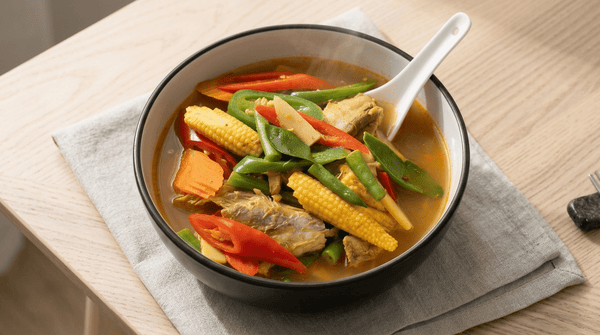
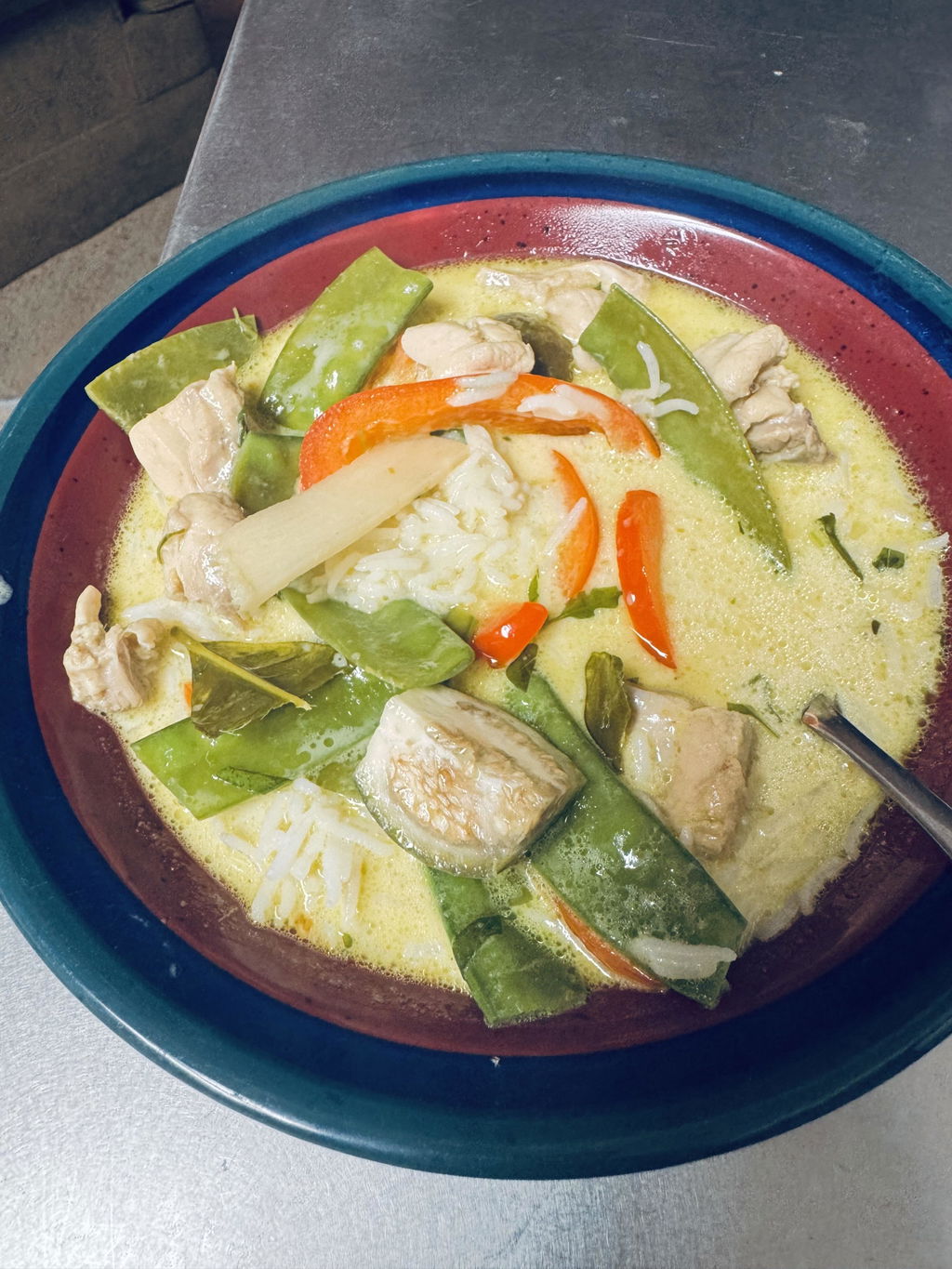
Jungle curry (gaeng pa) is a fiery, water-based Thai curry made without coconut milk. It’s packed with fresh herbs, vegetables and green peppercorns, so it eats light but still satisfies. This chicken version uses butternut squash, green beans and baby corn, and it’s one of my favorite curries of all time. I love my food fiercely spicy and full of vegetables, and a jungle curry is all of that in a bowl.
What is Jungle Curry?
Jungle curry comes from Thailand’s forested highlands, where coconut palms didn’t grow. Instead of coconut milk, cooks simmered wild herbs, fresh chilies and foraged vegetables in water over a fire. The word pa (ป่า) means “forest”, and the dish grew out of foraging.
It was traditionally made with wild boar or game birds. Today it’s more often cooked with chicken, pork or tofu, and it keeps its rugged, aromatic character. Unlike many Thai curries, gaeng pa doesn’t tone down its heat: it’s spicy, herbal and invigorating.
Fresh or Jarred Green Peppercorns?
Green peppercorns are peppercorns in their fresh state, before they’re dried into black or white pepper. They add an extra peppery punch to jungle curry, which I love.
You can buy them fresh “on the stem” from Asian supermarkets, or in jars and tins in brine. I prefer fresh on the stem because they look fantastic in the bowl. Jars and tins are handy because you can stock up and use them any time.
New to them? Eat only one or two per spoonful at first. Together with a fiery curry, the extra pepper can be a lot, but you’ll soon build up a tolerance!
How to Make Chicken Thai Jungle Curry
Prep the vegetables and chicken. Peel the butternut squash and cut it into medium cubes. Halve the baby corn lengthways, and trim the green beans and cut them into thirds. Slice the chicken thighs diagonally. Thighs have a little more fat than breast, which adds depth to the curry.
Fry the paste. Heat oil in a wok over medium-high heat and stir-fry the Mae Jum Jungle Curry Paste for 2 minutes. Season with fish sauce and palm sugar, breaking the paste down as you stir.
Add water and chicken. Pour in the water and bring to the boil. Add the chicken and simmer for 5 minutes, then add the squash and simmer for 2–3 minutes more.
Add the vegetables. Stir in the green beans, baby corn and green peppercorns. Tear in the makrut lime leaves, leaving out the middle stem. Simmer for 7–10 minutes, until the chicken is cooked through and the squash is tender.
Serve. Serve with steamed Thai jasmine rice or noodles. Garnish with sliced red chilies and holy basil if you can find it.

Jungle Curry FAQs
Is jungle curry spicy?
Yes. Jungle curry is one of the spicier Thai curries because there’s no coconut milk to soften the heat. To make it milder, use less paste and leave out the green peppercorns.
Can you make Thai curry without coconut milk?
Yes. Jungle curry is the classic example. It’s made with water or stock instead of coconut milk, so it’s lighter than coconut-based curries like green or red curry.
Can I make jungle curry vegan?
Yes. Mae Jum Jungle Curry Paste is vegan. Swap the chicken for tofu or extra vegetables and replace the fish sauce with a vegan alternative. See our Vegan Thai Jungle Curry.
What does gaeng pa mean?
Gaeng means curry and pa means forest, so gaeng pa translates as “forest curry”. That’s why it’s called jungle curry in English.
What should I serve with jungle curry?
Steamed Thai jasmine rice is the classic choice. Rice noodles work well too.
More Jungle Curry Recipes
From Jum’s Kitchen
Bold without being complicated, that’s jungle curry. Hunters in Thailand’s highland forests cooked it with wild herbs, fresh chilies and whatever came to hand, and that fierceness is what makes it so thrilling to cook at home.
Without coconut milk to soften it, gaeng pa hits with clean heat and layers of herbs. Green peppercorns bring a punch that builds, and makrut lime leaves lift every spoonful. Our Jungle Curry Paste is made from Jum’s family recipe, with the herbs stone-ground the traditional way. Make it once, and you’ll understand why some dishes are worth knowing by heart.
If you enjoyed this recipe, give it a star rating and leave us a comment below! Find more dishes like this on our recipes page, and follow us on Instagram and Facebook.
Chicken Thai Jungle Curry

- 500 g Chicken Thighs
- 35 g Mae Jum Thai Jungle Curry Paste
- 400 ml Water
- 100 g Baby Corn
- 100 g Green Beans
- 250 g Butternut Squash
- — Fresh Green Peppercorn
- — 3-4 Makrut Lime Leaves
- 1 tsp Palm Sugar
- 2 tbsp tbsp Fish Sauce
- 2 tbsp Oil
 Thai Jungle Curry Paste