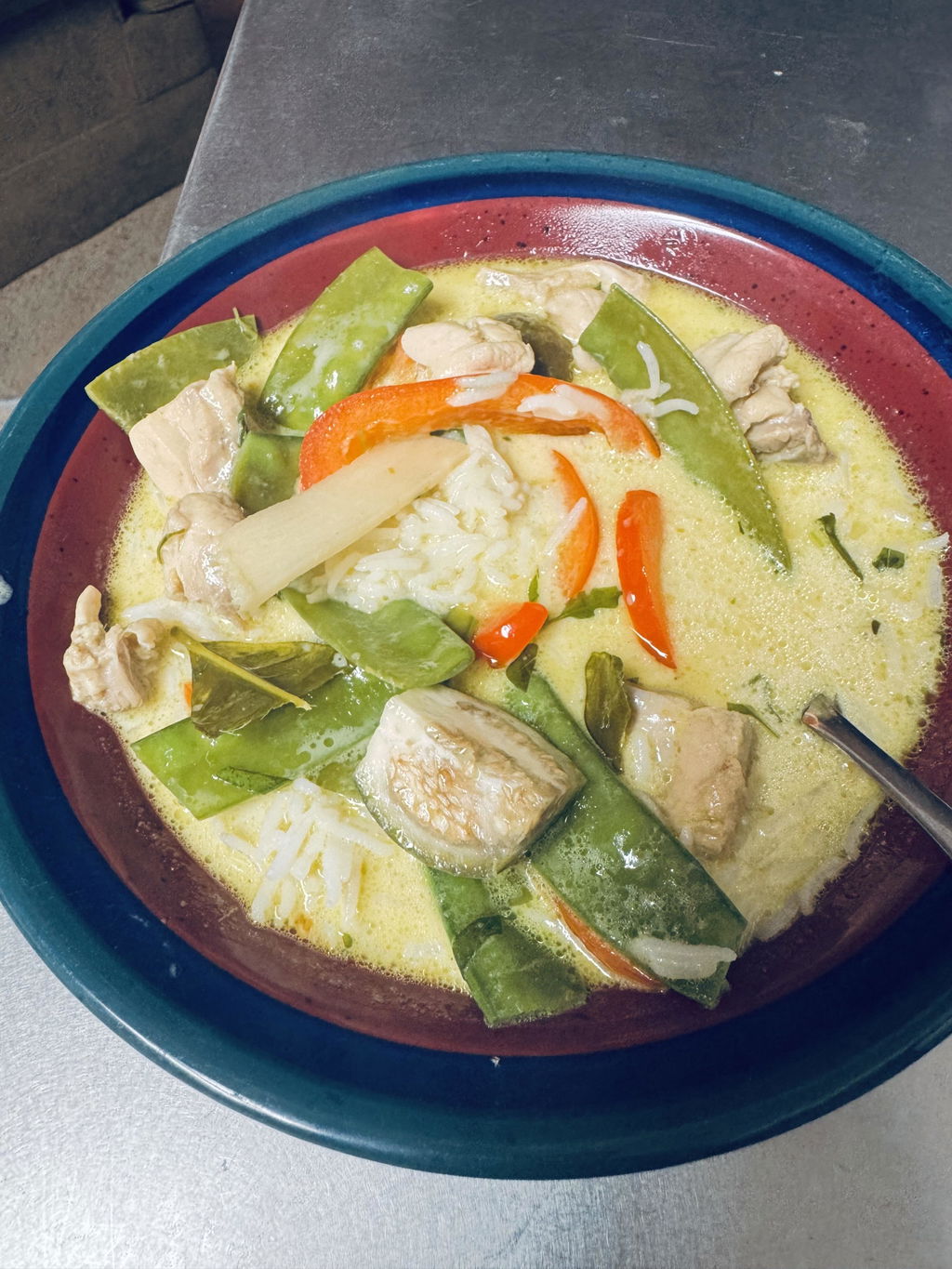
Rich, Creamy and Gently Spiced
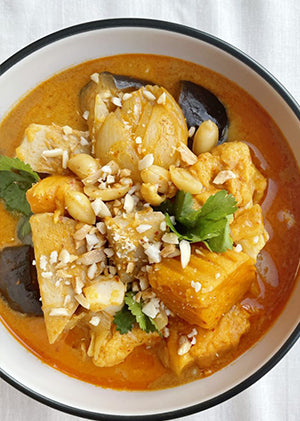
Thai chicken Panang curry is packed with flavor without overpowering your taste buds with chili heat. Although I love spicy food, sometimes I want the richer, milder side of Thai cooking, and this is the curry I turn to. It’s simple, back-to-basics cooking: tender chicken in a thick, fragrant curry sauce. What’s not to love?
Quick answer: To make chicken Panang curry, fry Panang curry paste in the thick coconut cream from the top of the tin for about 5 minutes, until the oil separates. Season with fish sauce and palm sugar, stir in thinly sliced chicken, then add the rest of the coconut milk and simmer for about 10 minutes. Garnish with finely shredded makrut lime leaves and serve with jasmine rice.
At a glance
Cooking time: about 20 minutes
Heat: mild (2/5)
Serves: 3–4
Key technique: let the coconut cream “crack” until the oil rises
What is Panang Curry?
Panang curry (phanaeng, sometimes spelled penang) is one of the richest and most fragrant curries in Thai cooking. It’s thicker than most Thai curries, because the sauce is reduced until it clings to the meat, and it’s milder and slightly sweeter than red curry.
Our Thai Panang Curry Paste is a UK Great Taste Award winner and is registered with The Vegan Society. It’s stone-ground from red chili, shallots, garlic, lemongrass, galangal, cilantro root, turmeric and makrut lime rind, with warm spices: cilantro seeds, cumin, nutmeg and white pepper.

Panang vs red curry: what’s the difference?
Panang curry |
Red curry |
|
|---|---|---|
Heat |
Mild (2/5) |
Medium-hot (3/5) |
Sauce |
Thick, rich and clinging |
Looser and more soupy |
Flavor |
Warm and rounded, with cilantro seeds, cumin and nutmeg |
Brighter and spicier, with black pepper |
Best for |
Anyone who wants rich flavor without much heat |
Anyone who likes a bit more kick |
The Secret: Let the Oil Separate
For me, Panang is all about the sauce. Traditionally it’s cooked until the coconut cream “cracks” and the oil separates, which Thai cooks call taek man. You’ll see a reddish layer of oil rise to the surface. It can look wrong the first time, but it’s exactly what you want: it means the paste has fried properly in the coconut fat, and the flavor is deeper for it.
In Thai restaurants and markets, a layer of colored oil on top of a curry is a good sign that it’s been cooked the traditional way: reddish for Panang and red curry, dark green for green curry. The same method works for all of them.
How to do it:
Use a good-quality, full-fat coconut milk. Don’t shake the tin.
Scoop the thick cream from the top into a wok. There’s no need for any oil.
Fry the curry paste in the cream over medium-high heat until blended.
Simmer for at least 5 minutes without stirring too much, and watch the colored oil rise.

Ingredients (serves 3–4)
500 g chicken breast (or thighs)
35 g Mae Jum Thai Panang Curry Paste
400 ml full-fat coconut milk
1 tbsp fish sauce
1 tbsp palm sugar
3 makrut lime leaves
1 large red chili
How to Make Chicken Panang Curry
Prep. Slice the chicken thinly on the diagonal. Finely shred the makrut lime leaves and slice the red chili.
Crack the coconut cream. Without shaking the tin, scoop the thick cream from the top of the coconut milk into a wok. Heat it over medium-high, add the curry paste and blend well. Bring it to a light boil and simmer for about 5 minutes, until the oil rises to the surface.
Season. Add the palm sugar and fish sauce, and stir well.
Add the chicken. Stir it through the sauce for about 2 minutes, until fully coated.
Simmer. Pour in the rest of the coconut milk and simmer for about 10 minutes, until the chicken is cooked through.
Serve. Garnish with the shredded lime leaves and red chili, and serve with steamed jasmine rice.
Tips for the Best Panang Curry
Don’t rush the cream. The 5-minute simmer is what builds the rich, glossy sauce.
Slice the chicken thinly, so it cooks quickly and stays tender.
Taste before serving. Add more fish sauce for salt, or a little palm sugar for sweetness.
Shred the lime leaves very finely. They’re eaten raw as a garnish, so thin strips are best.
For extra richness, finish with a few crushed roasted peanuts. It’s a popular way to serve Panang.
More Panang Curry Recipes
Make it with our Thai Panang Curry Paste
Panang Curry FAQs
Is Panang curry spicy?
Panang is one of the milder Thai curries. Our paste is rated 2 out of 5 for heat, which is gentler than red curry. Add less paste for an even milder curry.
Is Panang the same as Penang curry?
Yes. Panang, penang and phanaeng are all spellings of the same Thai curry.
Does Panang curry have peanuts?
Many cooks garnish Panang with crushed peanuts, but it’s optional. Our Panang curry paste’s ingredient list doesn’t include peanuts, and this recipe doesn’t use them. Always check the pack for allergen information.
Why has the oil separated in my curry?
That’s what should happen. When the coconut cream simmers with the paste, the oil separates and rises to the top. It’s a sign the paste has cooked properly and the curry will taste richer.
Can I use chicken thighs instead of breast?
Yes. Thighs stay juicier and add more flavor. Simmer them for a few extra minutes until cooked through.
Enjoyed This Recipe?
If you enjoyed our Chicken Panang Curry, please give it a star rating and let us know in the comments. Find more ideas on our recipes page, and follow us on Instagram and Facebook.
From Jum’s Kitchen
If you’re new to Thai curry, Panang is the perfect place to start. It’s rich, creamy and gently spiced, with all the depth of Thai cooking and none of the fear of too much chili. The one thing worth slowing down for is the coconut cream: let it simmer with the paste until you see the oil rise to the top. That’s when you know the flavor is building. Our Panang Curry Paste is stone-ground in Southern Thailand from our family recipe and has won a Great Taste Award, so the hard work is already done for you. Once you’ve made it with chicken, try it with shrimp, beef or tofu. It’s a curry that works with almost anything.
Chicken Thai Panang Curry

- 500 g Chicken breast
- 400 ml Coconut milk
- — Makrut lime leaves
- 1 tbsp Palm sugar
- 1 tbsp Fish sauce
 Thai Panang Curry Paste