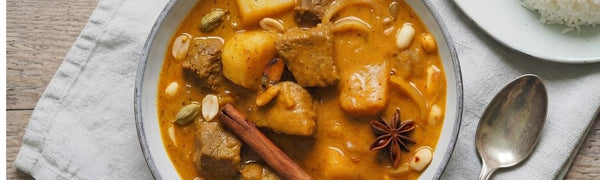
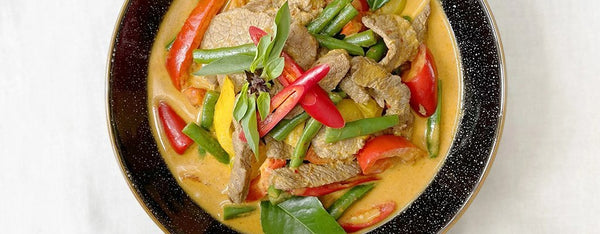
Thai Red Duck Curry with Pineapple (Gaeng Phed Ped Yang)
Some dishes are made for ordinary weeknights. This duck curry is not. Thai red duck curry with pineapple is the meal you make when the occasion deserves something more: a dinner party, a date night at home, or a Sunday that calls for proper cooking.
Crisp, rich duck breast, a fragrant coconut red curry sauce and the natural sweetness of pineapple come together in a way that feels genuinely special, without needing professional skills to pull off.
This recipe has one practical advantage: the duck and the sauce are cooked separately. You can make the sauce in advance and cook the duck just before serving. At a dinner party, that means you're at the table with your guests rather than stuck at the stove.
The Origins of Thai Red Duck Curry
Thai red curry is called gaeng phed (แกงเผ็ด), which means "spicy curry". Alongside green and yellow curry, it's one of Thailand's classic curries, and probably the best known around the world. Its paste gets its color from dried red chilies, pounded with galangal, lemongrass, makrut (makrut) lime zest, garlic, cilantro root and shallots.
Traditionally, every household had its own closely guarded recipe for this paste. Mae Jum's red curry paste is no different: it's based on our own family recipe.
The duck version, gaeng phed ped yang (แกงเผ็ดเป็ดย่าง), means "red curry with roast duck". It's most closely associated with Central Thailand, especially Bangkok, and is often served at celebrations and special occasions. Rich duck with a bold, aromatic sauce has earned it a place on Thai restaurant menus all over the world. It's traditionally finished with sweet fruit such as pineapple or lychees, which balance the heat beautifully.
The classic dish uses roast duck. In this version, I use pan-seared duck breast, which gives you crisp skin and tender, juicy meat with far less effort.

Why Red Curry Duck with Pineapple Works
The duck. Duck isn't an everyday meat, and that's part of what makes it so right for a dish like this. As it cooks, the fat beneath the skin renders slowly, giving a crisp, golden outside while the meat stays dark, rich and full of flavor. That richness stands up to the heat and fragrance of red curry paste in a way lighter meats can't. Chili, lemongrass and galangal finally meet their match.
The pineapple. Fruit in savory dishes is a natural part of Thai cooking. Here, pineapple brings three things: sweetness, a gentle tartness that cuts through the coconut milk, and a soft texture that soaks up the sauce as it simmers.
The coconut milk. It binds everything together, and it must be full-fat. As it simmers, its natural oil separates and rises to the surface, which Thai cooks call "cracking" the coconut milk. That's what gives the finished sauce its glossy richness. Reduced-fat coconut milk doesn't separate the same way, so the sauce loses depth. Read our guide to choosing the best coconut milk.
Key Ingredients
Mae Jum Thai Red Curry Paste: The aromatic backbone of the dish. Made with dried red chilies, lemongrass, galangal, makrut lime, shallots and cilantro root, it gives you the full depth of a traditional stone-ground paste without the preparation. The quality of the paste is the single biggest factor in the finished curry.
Duck breast: Free-range if possible. Score the skin before cooking so the fat renders evenly, cutting diagonally or in a crosshatch through the fat but not into the meat.
Pineapple: Fresh pineapple gives a brighter, more natural sweetness than tinned. It softens as it simmers and adds a gentle tartness that lifts the rich coconut sauce. If you use tinned, choose pineapple in juice rather than syrup, or the sauce can turn too sweet.
Full-fat coconut milk: Gives the sauce its body and glossy finish.
Bok choy: Cooked separately and briefly. Its slight bitterness balances the rich sauce and adds freshness.
Fish sauce: The salt of Thai cooking, bringing a savory depth no other seasoning can match.
Palm sugar: Rounds off the chili and the tang of the pineapple, bringing the sauce into balance. Soft brown sugar works as a substitute, but use slightly less.
Tips for the Best Duck Curry
Start the duck in a cold pan. Place the scored breast skin-side down in a cold non-stick pan with no oil, then bring it up to a medium heat gradually. The fat renders slowly and the duck fries in its own fat, giving you crisp skin and far more control.
Rest the duck before slicing. Give it at least 5 to 10 minutes off the heat so the juices settle back into the meat. Slice too early and they'll run straight out onto the board.
Crack the coconut milk. Let the coconut milk simmer until its oil separates and rises to the surface before you add the water and pineapple. That's how you know the sauce has cooked properly and the flavors have deepened.
Taste and adjust as you go. Balance is everything in Thai cooking. As the curry simmers, add a little more fish sauce for saltiness, palm sugar for sweetness, or a squeeze of lime for sourness.
Make the sauce ahead. The curry sauce keeps well in the fridge for up to 2 days. Reheat it gently and cook the duck fresh just before serving.
From Jum’s Kitchen
In my family, duck curry marks the occasions that matter. It isn’t a weeknight meal. It’s the food you make when you want to honor the people gathered around your table. My mother made gaeng phed ped yang (pronounced roughly “gaeng pet pet yaang”) for celebrations and important dinners. Every time, that combination of rich duck, bright pineapple and aromatic red curry paste felt both special and genuinely achievable at home.
That’s the gift of a dish like this. It looks and tastes restaurant-quality, but the technique is simple enough for any home cook to master. You render the duck in its own fat, build the sauce separately, and bring the two together in minutes. The pineapple adds sweetness and a gentle tartness that keeps the coconut from feeling heavy, so the curry tastes lighter than you’d expect, despite the richness of the duck.
What surprises most people is that the sauce tastes even better made a few hours ahead. That means you can spend your evening with your guests rather than hovering over the stove.
Cook this when you want to mark a moment: a promotion, a birthday that deserves more than a takeaway, or a date night when you want to show yourself and someone else that you can make something truly special. Mae Jum’s stone-ground paste brings the depth of flavor that would take hours to build from scratch. But the decision to cook something beautiful is always yours.
Duck and Pineapple Thai Red Curry

- 2 duck breasts
- 2 tbsp Mae Jum Thai Red Curry Paste
- 250 ml full-fat coconut milk or cream
- 100 g fresh pineapple, cut into small chunks (chunks)
- 1 bok choy
- 1 tbsp coconut oil
- 1 tsp fish sauce
- 1 tsp palm sugar
 Thai Red Curry Paste