A Guide to Cooking Thai Pork and Pumpkin Curry: The Perfect Comfort Food
Pumpkin and pork is a combination that feels completely natural once you taste it together in a Thai yellow curry. The sweetness of the pumpkin softens into the coconut sauce as it cooks, the pork absorbs the surrounding flavors quickly, and the makrut lime leaves add a fragrant citrus note that lifts everything. It is a curry that works all year round. Pumpkin peaks in the cooler months but is available throughout the year, and the warmth of the sauce is just as welcome on a summer evening as it is in the middle of winter.
When I cook with pumpkin I reach for kabocha, a Japanese pumpkin with dark green skin and sweet, dense flesh. The rind is edible and in Thai cooking is often kept on, particularly in desserts, but it can be peeled if you prefer. If kabocha is not available, butternut squash is the most practical substitute. It is slightly less sweet but behaves similarly and is considerably easier to peel.
What Makes This Dish Work
Mae Jum's yellow curry paste brings a genuine heat to this dish, spicier than both green and red, so the coconut milk and the natural sweetness of the pumpkin do important work here. They do not dilute the paste but bring it into balance, rounding out the heat and giving the sauce a body and creaminess that makes it deeply satisfying rather than sharp or one-dimensional.
What sets this dish apart is how actively the pumpkin contributes to the flavor. It is not a filler ingredient. As it softens during cooking it releases its sugars into the coconut base, giving the sauce a natural sweetness that means no palm sugar is needed here. The pork brings a mild, slightly savoury depth that absorbs the curry flavors well when sliced thinly and added at the right moment. Together with the fragrant makrut lime leaves and the warmth of the paste, the result is a curry that is bold, rounded, and satisfying without ever feeling heavy.
Thai Yellow Curry: Origins and Pairings With Pumpkin
Mae Jum's yellow curry is Gaeng Lueng (แกงเหลือง), the southern Thai version of yellow curry made with coconut milk. It is worth distinguishing this from two other curries that share similar names but are quite different in character. Gaeng Kari (แกงกะหรี่) is the Indian-influenced yellow curry most commonly found in central Thailand and in Thai restaurants abroad, built around dried spices like cumin, cilantro, and cardamom. Gaeng Som (แกงส้ม) is a sour, tamarind-based southern curry made without coconut milk entirely. Gaeng Lueng sits in its own category, rooted in southern Thailand, built on fresh aromatics, and given its rich, creamy character by coconut milk.
Pumpkin and squash have long featured in Thai cooking across a variety of dishes, from stir-fries to sweet coconut milk desserts. Incorporating pumpkin into a yellow curry is a natural pairing that works particularly well with the spice profile of Gaeng Lueng. The sweetness of the pumpkin and the heat of the paste find an easy balance in the coconut base, and that balance is what makes this particular combination worth coming back to.
Key Ingredients
Mae Jum Thai Yellow Curry Paste is the foundation of the dish. Frying it in coconut oil before adding any liquid is essential. It activates the aromatics, deepens the flavor, and begins to build the base of the sauce properly. Two minutes minimum, three to four over a slightly lower heat will develop even more complexity.
Pumpkin is more than a vegetable here. It becomes part of the sauce as it cooks, releasing its natural sugars into the coconut base and giving the curry a body and sweetness that no other ingredient replicates in quite the same way. Cut into evenly sized chunks of roughly 3 to 4 cm so they cook at the same rate.
Pork Fillet is a lean, quick-cooking cut that works well here precisely because it does not need long in the sauce. Sliced thinly on the diagonal, it cooks through in 5 to 7 minutes and absorbs the surrounding flavors well. Avoid overcooking it as pork fillet becomes dry quickly if left too long.
Coconut Milk should always be full-fat and do not shake the tin before opening. The thick creamy layer at the top goes in first with the paste to build the sauce base. The thinner liquid from the rest of the tin follows with the pumpkin to loosen the sauce as it simmers.
Makrut Lime Leaves are torn roughly and added towards the end of cooking. Tearing rather than leaving them whole releases more of their essential oils and fragrance into the sauce. Remove before serving if preferred as the leaves themselves are not typically eaten.
Fish Sauce seasons the sauce throughout cooking. Start with two tablespoons and adjust to taste before serving. If cooking for someone who avoids fish products, light soya sauce works as a substitute though the flavor will be slightly different.

Cooking Tips
Do not rush the paste. Stir frying it in coconut oil before adding any liquid is the most important step in building the flavor of the sauce. Give it at least two minutes, stirring constantly, until the oil begins to separate and the kitchen fills with the fragrance of the paste.
Crack the coconut milk. Adding the thick top layer of coconut cream first and simmering it with the paste until the oils visibly separate on the surface is a traditional technique used across South and Southeast Asian cooking. The oil rising to the surface tells you the sauce has developed properly and the fat has cooked through. Do not skip this step.
Cut the pumpkin evenly. Uniform pieces cook at the same rate. Aim for chunks of roughly 3 to 4 cm. Too large and they will still be firm when the pork is ready. Too small and they will break down into the sauce before everything else is cooked.
Taste before serving. The pumpkin brings its own sweetness to the sauce which means no additional palm sugar is needed, but the level of sweetness can vary depending on the pumpkin. Taste towards the end of cooking and adjust with a little more fish sauce if the sauce needs more depth.
How to Cook It
The full step-by-step recipe is in the recipe card below, but here is how the dish comes together.
Prepare the pumpkin and pork first. Peel and cut the pumpkin into even chunks, and slice the pork thinly on the diagonal. Heat the coconut oil in a wok, fry the curry paste for two minutes, then add the thick top layer of coconut milk and blend well with the paste. Season with fish sauce and simmer for 5 minutes until the oils rise to the surface.
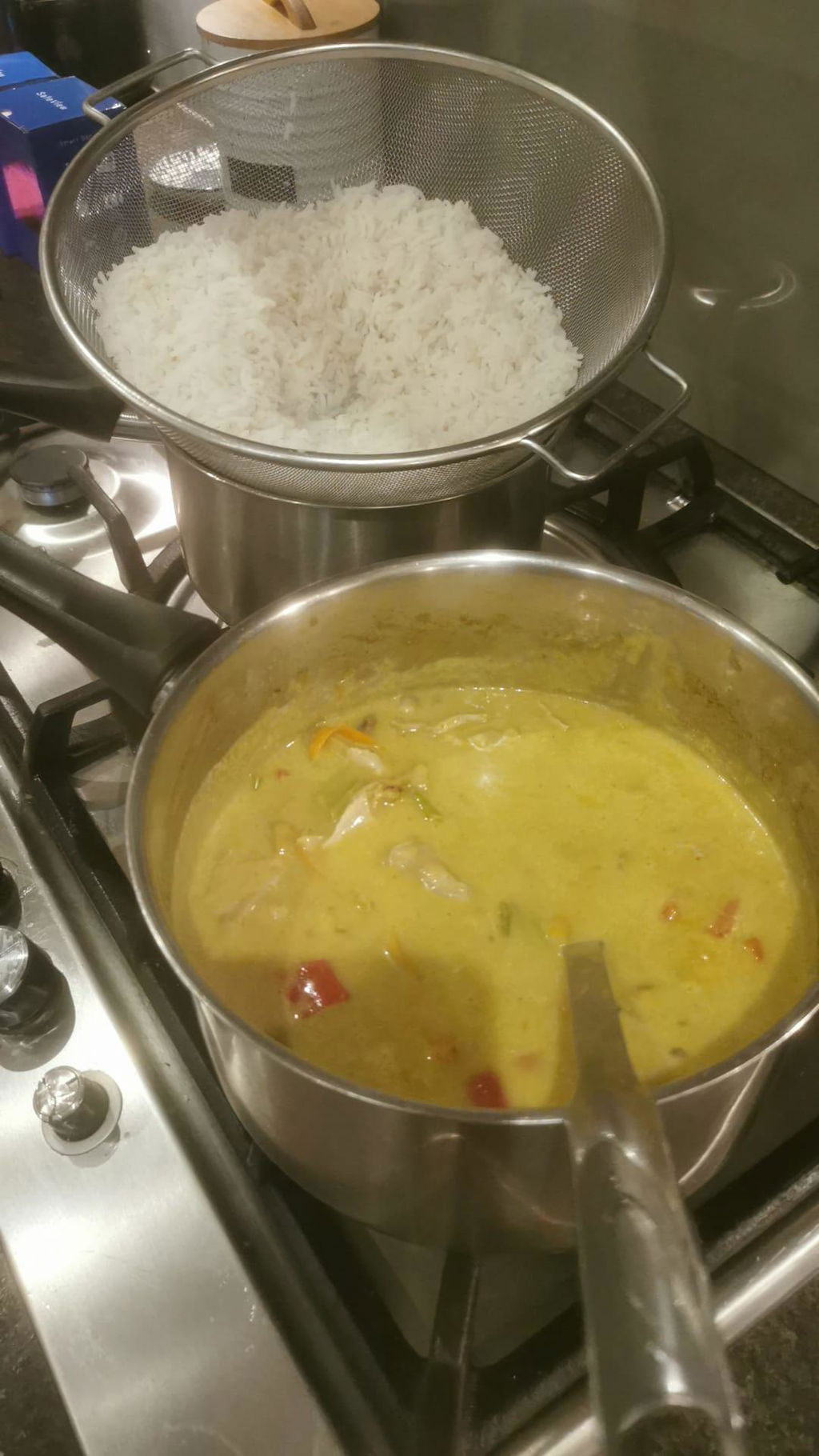
Add the remaining coconut milk and pumpkin chunks and simmer for 7 to 10 minutes until the pumpkin begins to soften. Tear in the makrut lime leaves and add the pork slices, stirring gently to coat everything in the sauce. Simmer for a further 5 to 7 minutes until the pork is cooked through and the pumpkin is completely tender. Taste and adjust seasoning before serving over steamed jasmine rice.
Final Thought
There's something about pumpkin and coconut milk in yellow curry, familiar and entirely new at once. In Southern Thailand, this is rooted in cooking with what seasons provide. Pumpkin sweetens into the sauce, turning everything luxurious but never heavy, bold but never one-note. For American kitchens: authentic flavor without fuss.
Mae Jum's yellow paste carries the real flavors of Southern Thai cooking. Forty-five minutes later, you're eating something genuine. Make it once and you'll find yourself making it again, adjusting fish sauce, learning how your pork cooks. That's how food becomes part of a home.
If you enjoyed this recipe, give it a star rating and leave us a comment below! Check out our recipe page for more delicious dishes like these and follow us on Instagram and Facebook
Pork and Pumpkin Thai Yellow Curry

- 35 g Mae Jum Thai Yellow Curry Paste
- 400 g pork fillet, thinly sliced on the diagonal
- 350 g pumpkin, peeled and cut into bite-sized chunks
- 400 ml full-fat coconut milk
- 2 tbsp Fish sauce
- — makrut lime leaves (3 or 4 )
- 1 tbsp coconut oil
 Thai Yellow Curry Paste