A Guide to Cooking Thai Green Pork Curry: A Fragrant, Feel-Good Family Favorite
There are some dishes that, the moment they hit the pan, fill the entire kitchen with a smell that stops you in your tracks. Thai Green Pork Curry is one of them. That first minute of curry paste in hot oil, the lemongrass, the galangal, the green chili all releasing at once, is one of the great moments in home cooking.
This is a dish with real depth behind it, but the technique is genuinely accessible. You don't need specialist equipment or hours at the stove. A quality curry paste, full-fat coconut milk, good pork, and a handful of fresh Thai basil is the foundation of something that tastes far more considered than the time it takes to make.
What Makes Thai Green Curry Special?
There are hundreds of curry recipes across Southeast Asia, but Thai green curry holds a particularly special place in the hearts of food lovers around the world. What sets it apart is the balance of flavors it achieves in a short amount of cooking time. You get heat from the green chilies, creaminess from the coconut milk, savoury depth from fish sauce, gentle sweetness from palm sugar, and a fresh herbaceous finish from Thai basil and lime. No single flavor dominates, they work together to create something cohesive and memorable.
Unlike heavier, slow-cooked curries, Thai green curry is light and aromatic. The sauce is silky rather than thick and stodgy, which makes it just as enjoyable on a warm summer evening as on a cold winter night. It's also highly versatile, once you learn the base technique, you can adapt it to whatever protein or vegetables you have available.

Origins: Where Does Thai Green Curry Come From?
Thai green curry, known in Thailand as Gaeng Keow Wan (แกงเขียวหวาน), loosely translated as "sweet green curry", is believed to have originated in central Thailand in the early 20th century. It sits alongside red curry and Pad Thai as one of Thailand's most iconic dishes.
The green color comes from the fresh green chilies in the curry paste. Traditionally, the paste was made by hand using a heavy stone mortar and pestle, grinding together chilies, lemongrass, galangal, makrut lime zest, shrimp paste, garlic, shallots, and fresh cilantro root, a labour-intensive process that produced an intensely aromatic base. As Thai cuisine spread internationally from the 1970s onwards, green curry became one of the first Thai dishes to gain widespread recognition abroad, and it remains one of the most ordered Thai dishes worldwide.
Pork has long been a staple protein in Thai cooking, particularly in central and northern Thailand. Pork belly is prized for its fat marbling, which renders into the sauce as it cooks and enriches every mouthful. Combining pork with a green curry sauce is a natural and well-loved pairing in authentic Thai home cooking.
Ingredients You'll Need
The Pork Choose pork belly slices, pork loin steak, or fillet, and cut into thin strips rather than thick chunks. Pork belly is the most flavorful option thanks to its fat content, which melts into the sauce and adds depth. Pork loin or fillet is a leaner alternative that still delivers great results. If you'd prefer a different protein, chicken, beef, salmon, and shrimp all work well with this sauce. For a vegetarian version, jackfruit, eggplant, and green peas are excellent additions.
The Curry Paste The paste is the soul of the dish. We recommend using a quality Thai green curry paste such as Mae Jum, made using authentic Thai ingredients. A good paste should be deeply fragrant the moment it hits hot oil, releasing its aromatics immediately. If you have the time, making your own paste from scratch is a rewarding process but for a weeknight meal, a quality paste does an excellent job.
Coconut Milk Full-fat coconut milk only. The fat content is what gives the sauce its signature creamy, velvety texture. One of the classic Thai techniques is to separate the thick cream at the top of the tin from the thinner liquid beneath, adding each at different stages of cooking. This simple step makes a noticeable difference to the depth and richness of the final sauce.
Fish Sauce and Palm Sugar These two ingredients are the backbone of Thai seasoning. Fish sauce provides a deeply savoury, umami-rich saltiness, while palm sugar adds a gentle caramel-like sweetness that rounds off the heat of the chilies. Light brown sugar works as a substitute for palm sugar, but use a little less as it is sweeter. For a vegan version, substitute fish sauce with soy sauce or a dedicated vegan fish sauce.
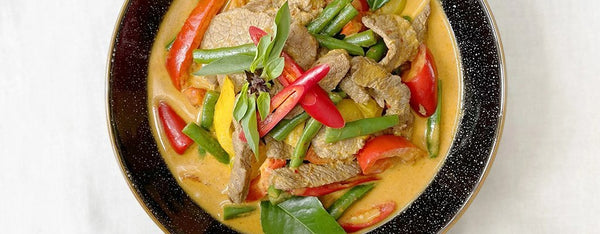
The Vegetables Green beans, bell pepper, and baby corn are used here. They retain a slight crunch even after simmering, adding texture and color to the dish and helping to bulk it out. Feel free to swap in zucchini, broccoli, sugar snap peas, or mushrooms depending on what you have.
Sweet Thai Basil Do not substitute with Italian basil. Sweet Thai basil has a distinctly aniseed, slightly peppery flavor that is quite different from its Mediterranean counterpart. It is stirred in at the very end of cooking to preserve its delicate aroma, and used again as a garnish for a final hit of freshness.
How to Cook Thai Green Pork Curry
Prepare and cut all your ingredients before you turn on the heat. This dish moves quickly once it's started, and being organized beforehand makes the whole process smooth.
Heat a wok over medium-high heat and fry the green curry paste in a little oil for 2 minutes, stirring constantly, until fragrant and the oil begins to separate. Do not rush this step, blooming the paste in hot oil activates the aromatics before any liquid is added.
Pour in the thick top layer of coconut milk along with the fish sauce and palm sugar. Stir well to combine, bring to a light boil, then reduce the heat and simmer for 5 minutes. This process known in Thai cooking as "cracking the coconut cream", it is what gives the sauce its glossy surface characteristic of an authentic Thai curry.
Add the pork and spread it evenly through the pan so the pieces aren't stacked on top of each other. Cook for 5–7 minutes, stirring occasionally to coat the pork in the sauce. Pour in the remaining coconut milk, add the vegetables, and simmer for a further 7–10 minutes until the vegetables are tender but still have a little bite.
Taste the sauce and adjust: a dash more fish sauce if it needs salt, a pinch more sugar if the chili heat is running ahead. Turn off the heat and gently fold in a generous handful of fresh Thai basil, letting the residual warmth draw out its fragrance.
Serve over freshly steamed jasmine rice or rice noodles, and finish with more Thai basil and a squeeze of fresh lime to brighten everything up.
Cooking Tips for the Best Thai Green Curry
Don't skip the paste-frying step. Two full minutes in hot oil before any liquid is added is what builds the flavor foundation of the dish.
Taste as you go. Thai cooking is built on balance, heat, sourness, saltiness, and sweetness are all adjustable throughout the cooking process. Use fish sauce, palm sugar, and lime juice to correct as needed.
Keep the vegetables with some bite. Aim for just tender rather than soft. Texture is part of what makes the dish work.
Prep everything first. Because the dish comes together quickly, having everything cut and measured before the wok goes on makes a real difference.
Final Thought
Gaeng Keow Wan—that's what we call it at home—arrived in America at just the right moment in the 1970s, when home cooks were beginning to look beyond their own borders for flavor and excitement. Thai green curry became a gateway into something bigger: the realisation that authentic cooking doesn't require flights and restaurant reservations, just good ingredients and a willingness to learn. The pork becomes almost silken in the coconut sauce, while those vegetables stay crisp and bright. It's one of those dishes that tastes far more complicated than it is to make.
What I love about bringing Mae Jum's stone-ground paste into American kitchens is that it closes the gap between 'authentic Thai food' and 'something I can actually make tonight.' There are no artificial thickeners here, no shortcuts masquerading as convenience. The paste tastes the way it should because it's made the way it's always been made—by hand, with whole ingredients, in small batches. That difference is noticeable the moment it hits the pan.
Cook this curry on a Tuesday night when you want something that feels special but doesn't demand hours at the stove. Share it with people who are curious about real Thai cooking. Use it as proof that you don't need to compromise on authenticity to eat well on a weeknight.
Thai Pork Green Curry with Vegetables

- 500 g Pork
- 400 ml Coconut Milk
- 35 g Mae Jum Thai Green Curry Paste
- 100 g Green Beans
- 1 Bell Pepper
- 150 g Baby Corn
- 1 tbsp Palm Sugar
- 1 tbsp Fish Sauce
- — Sweet Thai Basil
- 1 Lime
 Thai Green Curry Paste