Understanding Thai Curry Spice Levels
‘Which is hotter? Red curry or Green curry?’ is probably one of the most asked questions when it comes to discussing Thai green and red curries. Times have changed and travel has become more affordable to visit different countries and experience their culture and cuisine.
Chefs and restaurateurs can take inspiration from Thai cuisine and then change traditional recipes to fit the western consumer, most commonly to make curries milder or all curries will have the same spice. The chefs and restaurant owners who were born in Thailand cook true to their home without adjusting their recipes, producing the truly distinctive difference between the curries.

Thai Green Curry vs Red Curry: Which Is Spicier?
In general, traditional Thai green curry is hotter than Thai red curry. I say ‘in general’ because it does differ between the regions of Thailand. In southern Thailand green curry is much hotter than the green curry you will find in Thailand’s capital city, Bangkok. When cooking at home, you will make a curry that suits your preference and spice tolerance. If you prefer to make your Thai red curry hotter, go for it! You’re not wrong or disrespecting Thai cuisine for doing so.
Mae Jum’s Curry Paste Heat Levels
Our Thai green curry paste at Mae Jum is slightly less hot than our Thai red curry paste. The reason behind this is that my great grandmother loved to make her green curry this way with a secret combination of different green chilies varieties, some for heat and some for vibrancy. Her recipe has been passed down from generation to generation. The way my mother remembers her grandmother making it for her is the way we want to share it with you!

Authenticity and Ingredients
What Makes a Curry Spicy?
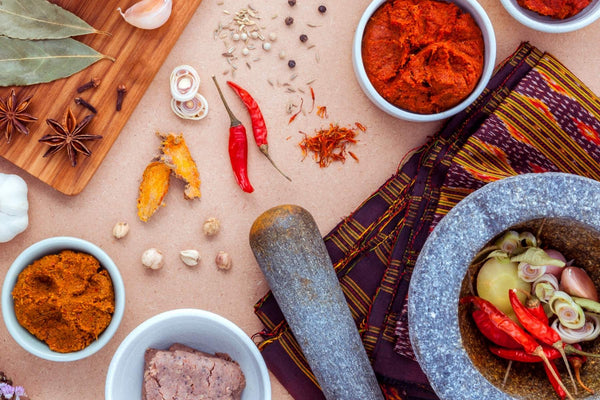
Authenticity is important to us. I can assure you that there is still a kick to our Thai green curry paste. Without a doubt, you can tell us apart from other Thai green curry pastes on the market for being the spiciest! Whereas our Green Curry paste uses fresh green chilies, our Red Curry paste uses dry roasted red chilies which are more intense.
The Role of Chili Varieties
The quantity of the chili doesn’t always determine how spicy it will be. There are many varieties of chili which are grown in different landscapes and climates in Thailand. Some are small and spicy while others are big and sweet. Using a range of different kinds of chili will yield the perfect balance of heat and sweetness.
We use some sweeter green chilies to make our ‘kaeng kiew wan’ which actually translates to ‘sweet green curry’. The sweetness from the shallots will also balance the spice in the paste. Whereas in our Thai red curry paste, we use red chilies varieties that are more flavoursome, but spicier.
Final Thought
If you've ever stood in the Thai aisle trying to figure out which curry paste to buy, you've probably noticed they all claim to be "authentic." But here's the thing: authenticity isn't just about the label. It's about how the paste is made, who's making it, and whether the recipe has been tested by generations of home cooks—not a product development team.
Thai food in America has come a long way. It's gone from being considered "exotic" to being a weeknight staple. But that also means a lot of shortcuts have crept in. Powdered pastes. Standardized heat levels. Recipes designed to be inoffensive rather than interesting. Mae Jum is the opposite of all that. It's what Thai curry is supposed to taste like when someone who grew up with it is in charge.
So the next time you're making curry at home, remember: you're not just following a recipe. You're connecting to a tradition that values flavor, family, and the kind of cooking that brings people to the table. And that's something worth savoring.